
Finding Fall Color in Yucaipa, Forest Falls, and Oak Glen
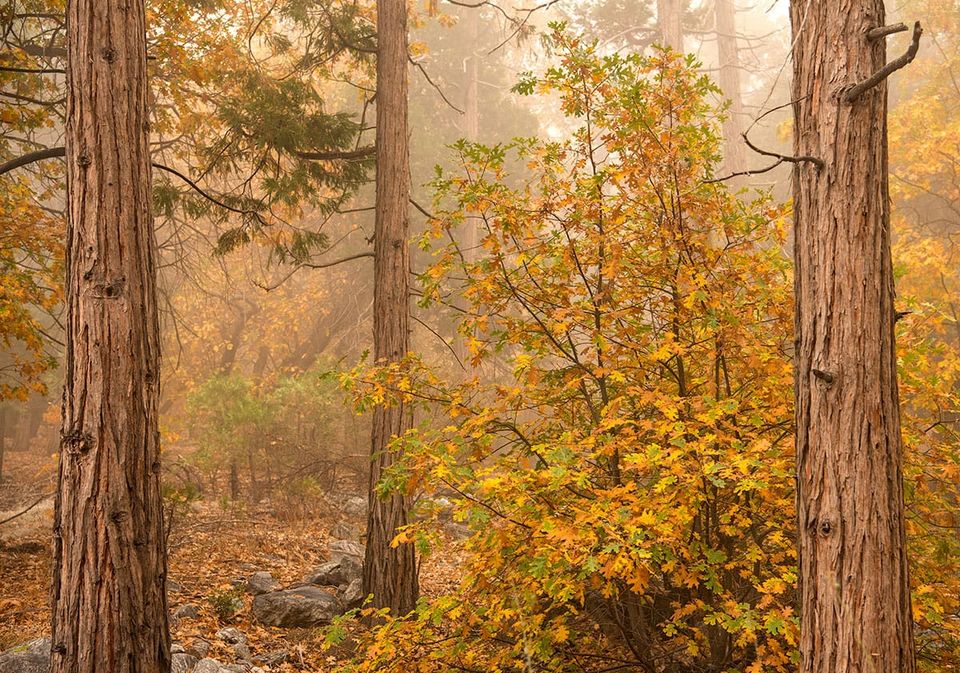
Every autumn, I find myself splitting my time between the Sierra Nevada and Yucaipa. While them Sierras have no shortage of spectacular fall color, with grand landscapes and entire mountainsides transforming with the season, Yucaipa is a bit different.
You have to search for it. Sometimes it's a small grove tucked into the mountains. Other times, it's a single tree in someone's front yard (mostly my own). It changes the approach from photographing grand landscapes to finding more intimate, intentional moments and compositions.
Some of my favorite scenes come from our local mountains, some from my backyard, and others from neighborhoods around town.
I guess the point I'm trying to make is that fall is easy to miss in Southern California. But it's equally easy to appreciate if you're intentional about looking for it.
So, I thought I'd share a few of my favorite locations, along with some of the techniques I use to photograph the season.
Where to Find Fall Color
Forest Falls
The Schoolhouse
One of the more obvious locations is Forest Falls, specifically the grove of black oaks near the old schoolhouse.
A short path winds through the trees, roughly half a mile or so, making it an easy place to experience the changing season up close.
The challenge with photographing this grove is that you're literally standing in the middle of it. And while that's a cool experience, it can make finding compelling compositions surprisingly difficult. The trees, branches, and foliage tend to blend together, leaving little contrast or a clear subject to anchor the image.
My approach here is to focus on the trunks themselves. Their dark, defined shapes create structural contrast against the colorful foliage, giving the composition something to hold onto. Or to find the occasional pine tree and use that bad boy as a backdrop against the foliage.
They're simple adjustments, but both can make a significant difference.
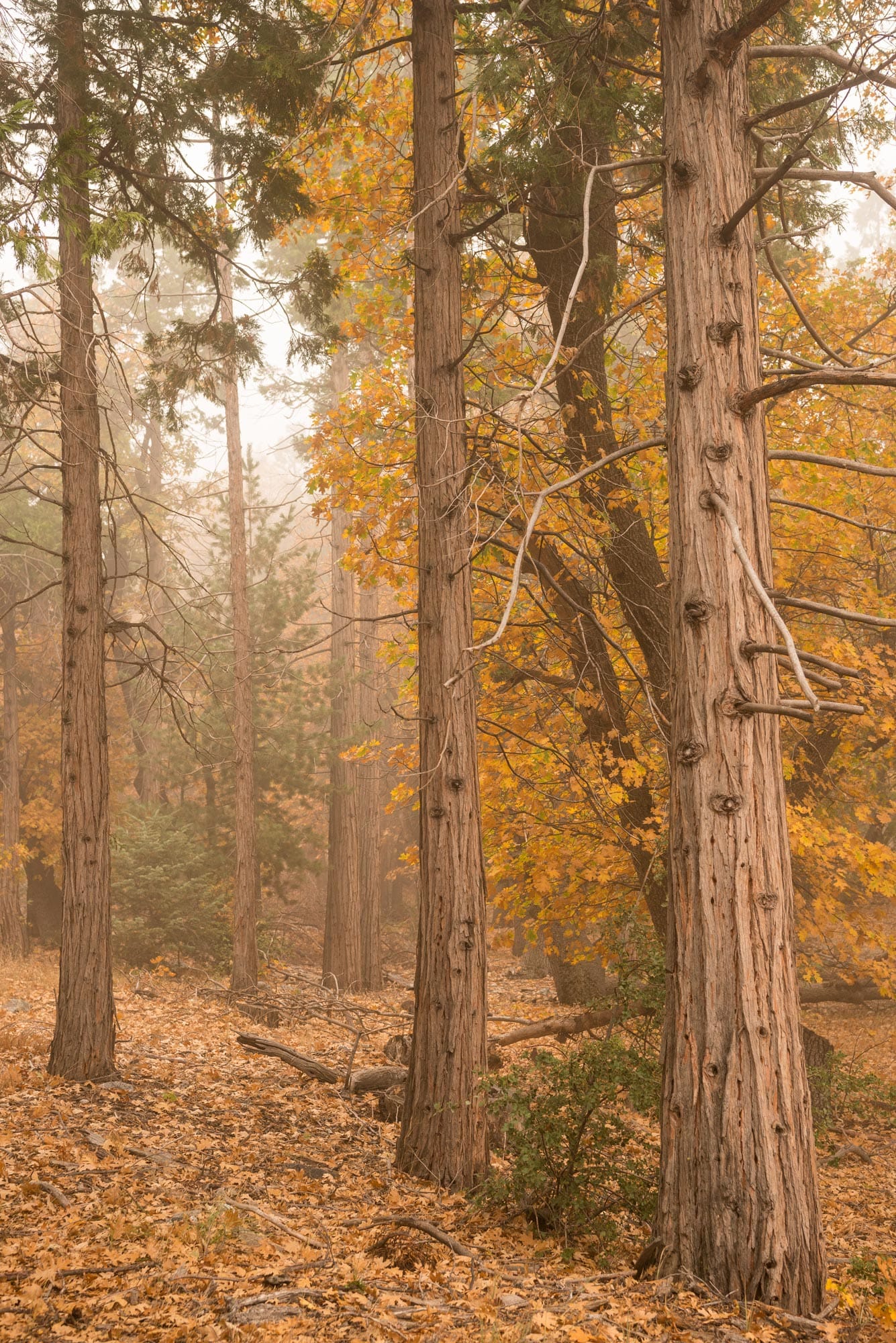
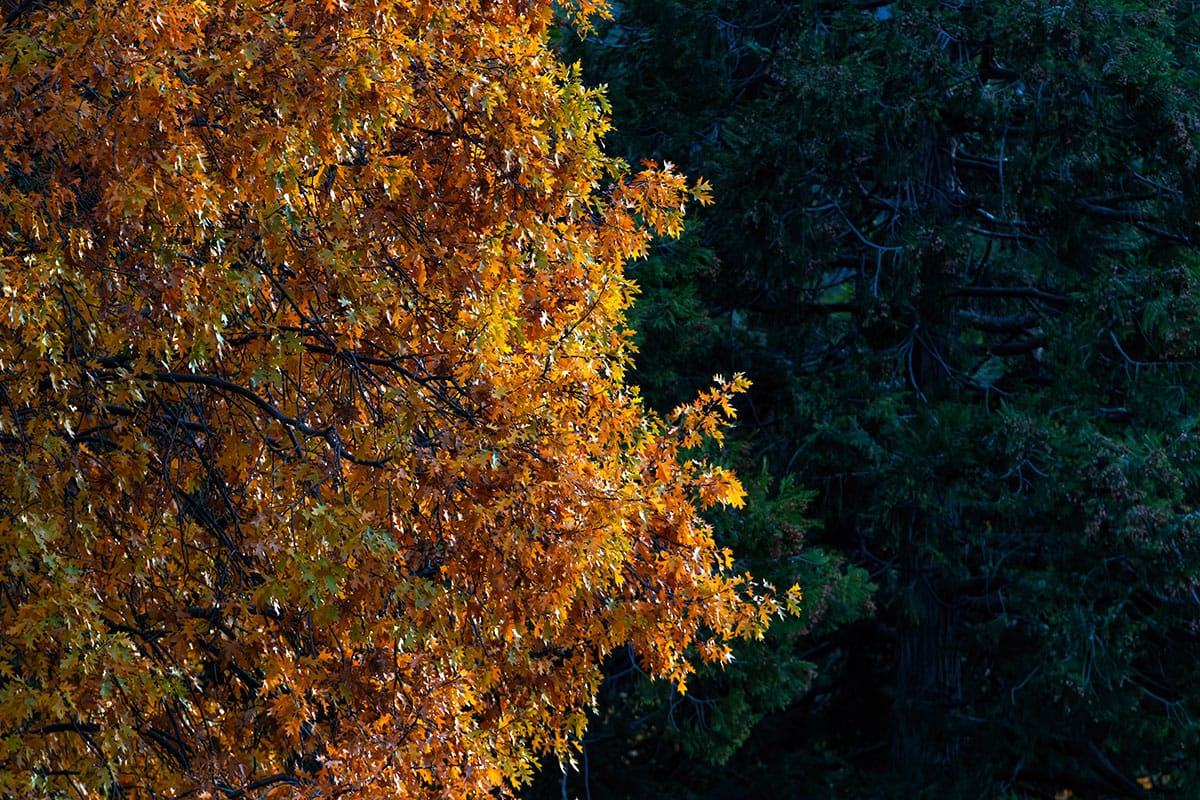
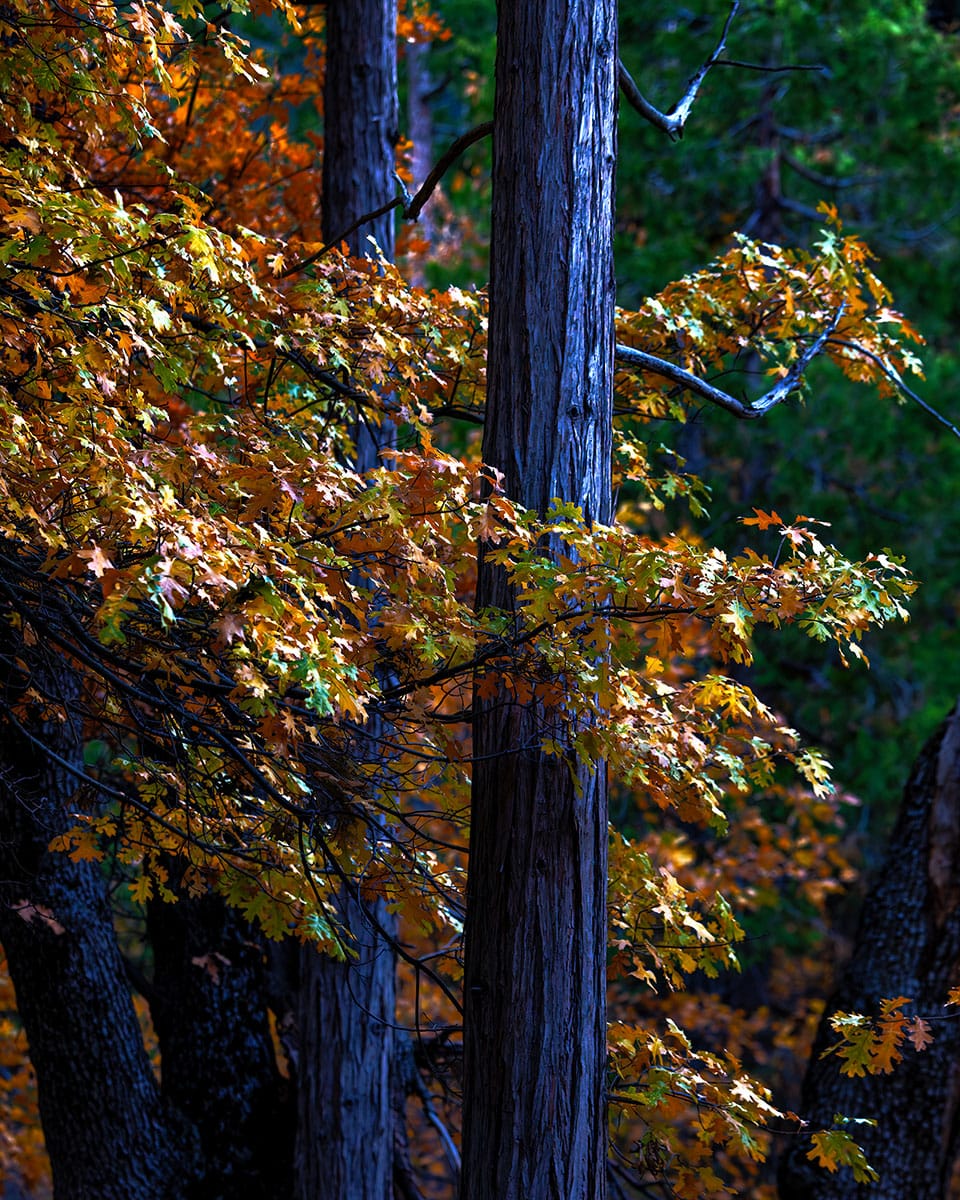
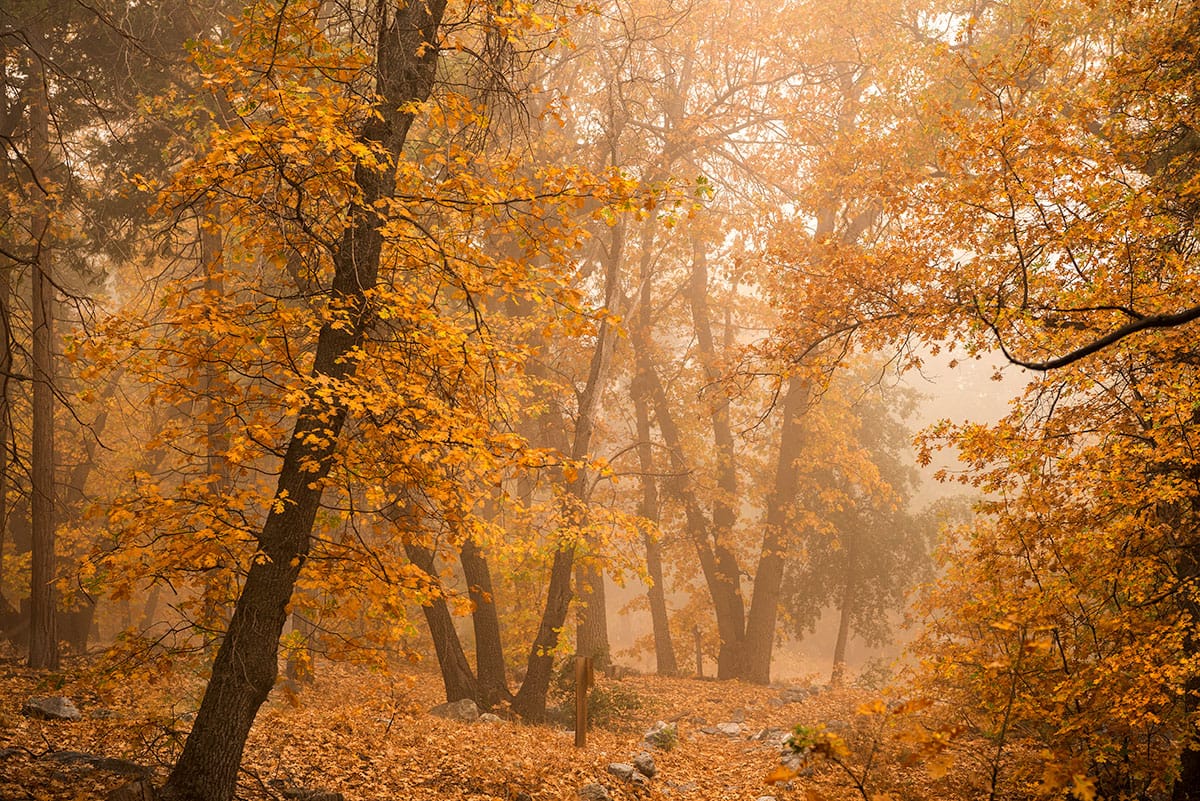
Fall Oaks along the schoolhouse property in Forest Falls
Momyer Trail
Now, let's take that same grove of trees and look at it from above.
And no, I'm not talking about using a drone.
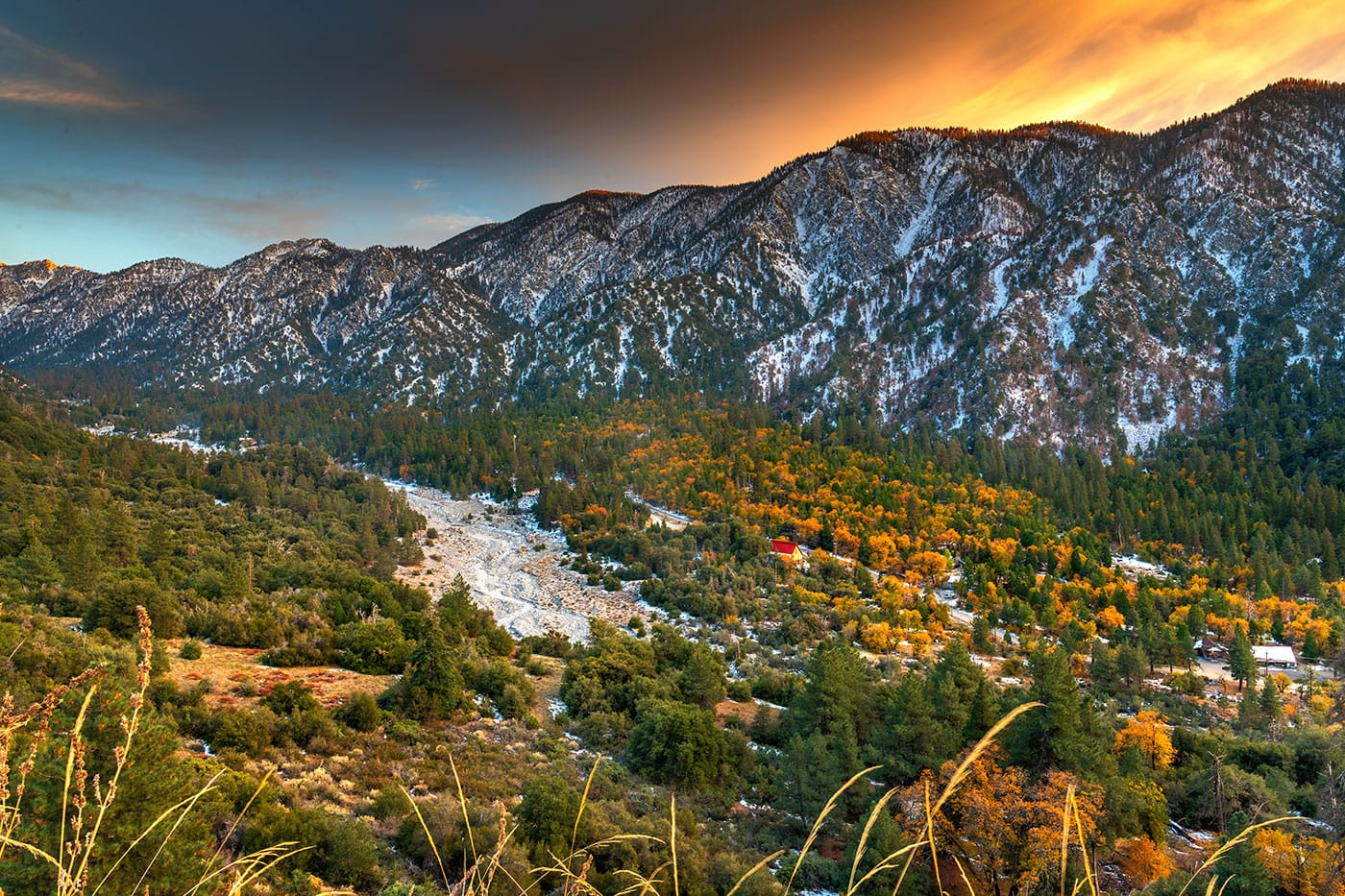
A hike of roughly a mile up the Momyer Trail offers an elevated perspective overlooking the grove, with the northern slopes of Yucaipa Ridge becoming part of the scene.
Suddenly, the intimate compositions from below become wider, layered landscapes. Rather than isolating individual trees, you can use the surrounding mountains to give the fall foliage a sense of place and scale.
It's a completely different approach to photographing the same location.
Yucaipa
Yucaipa has its own collection of fall color, although you won't necessarily find it concentrated in one location.
Some of the most consistent displays I've found come from Chinese pistache, sweetgum (often called liquidambar), flowering pear, birch and persimmon trees. These varieties can produce spectacular colors, and they're scattered throughout town.
You'll find them in parks, neighborhoods, developments, and plenty of residential yards. And sometimes just a pile of leaves.
I won't be giving out specific locations on private property (including my own!), but that's part of the fun. Sometimes the best approach is simply to walk around, pay attention, and enjoy the scenery.
Here are a few moments I've captured around town.
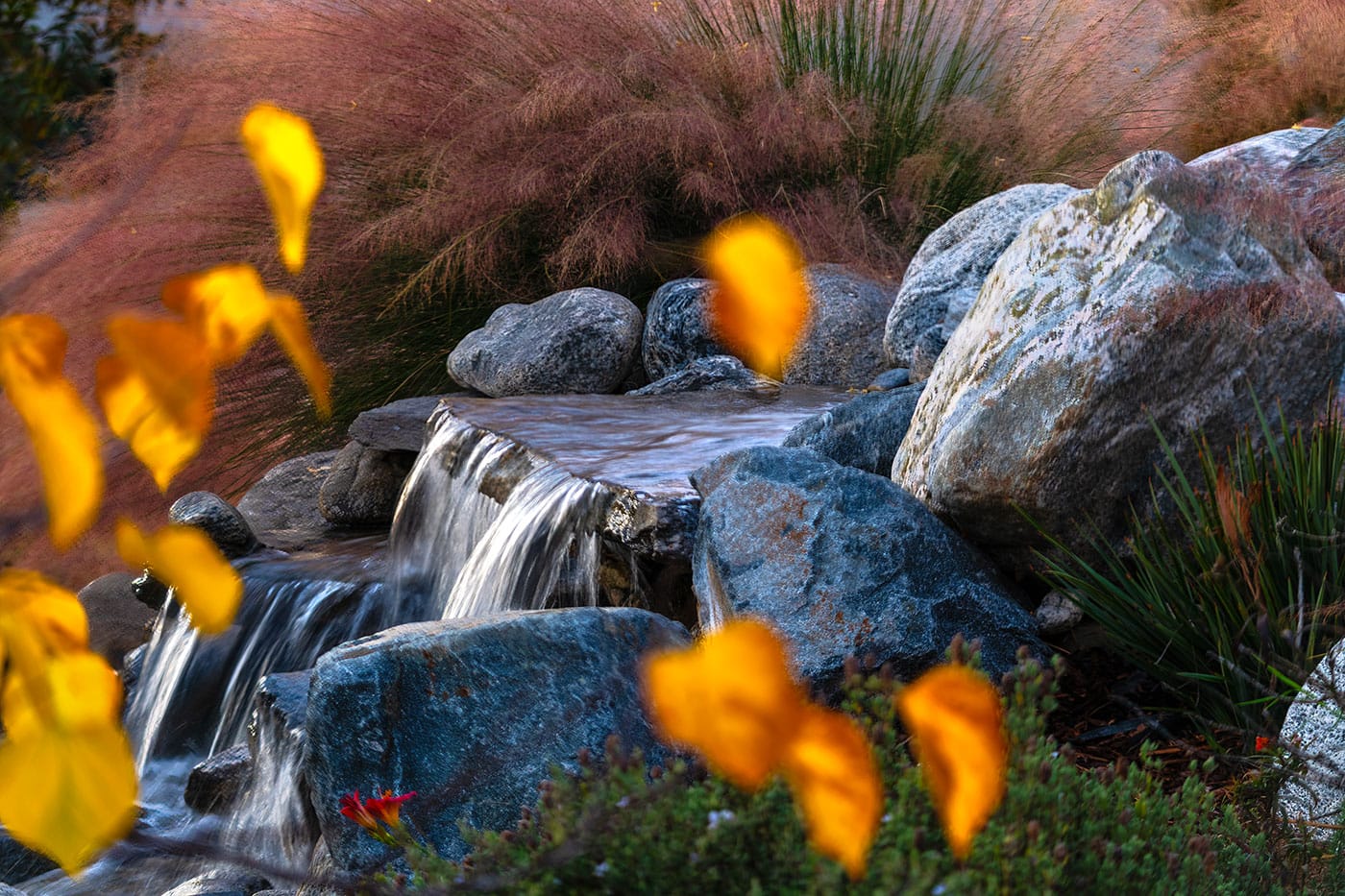
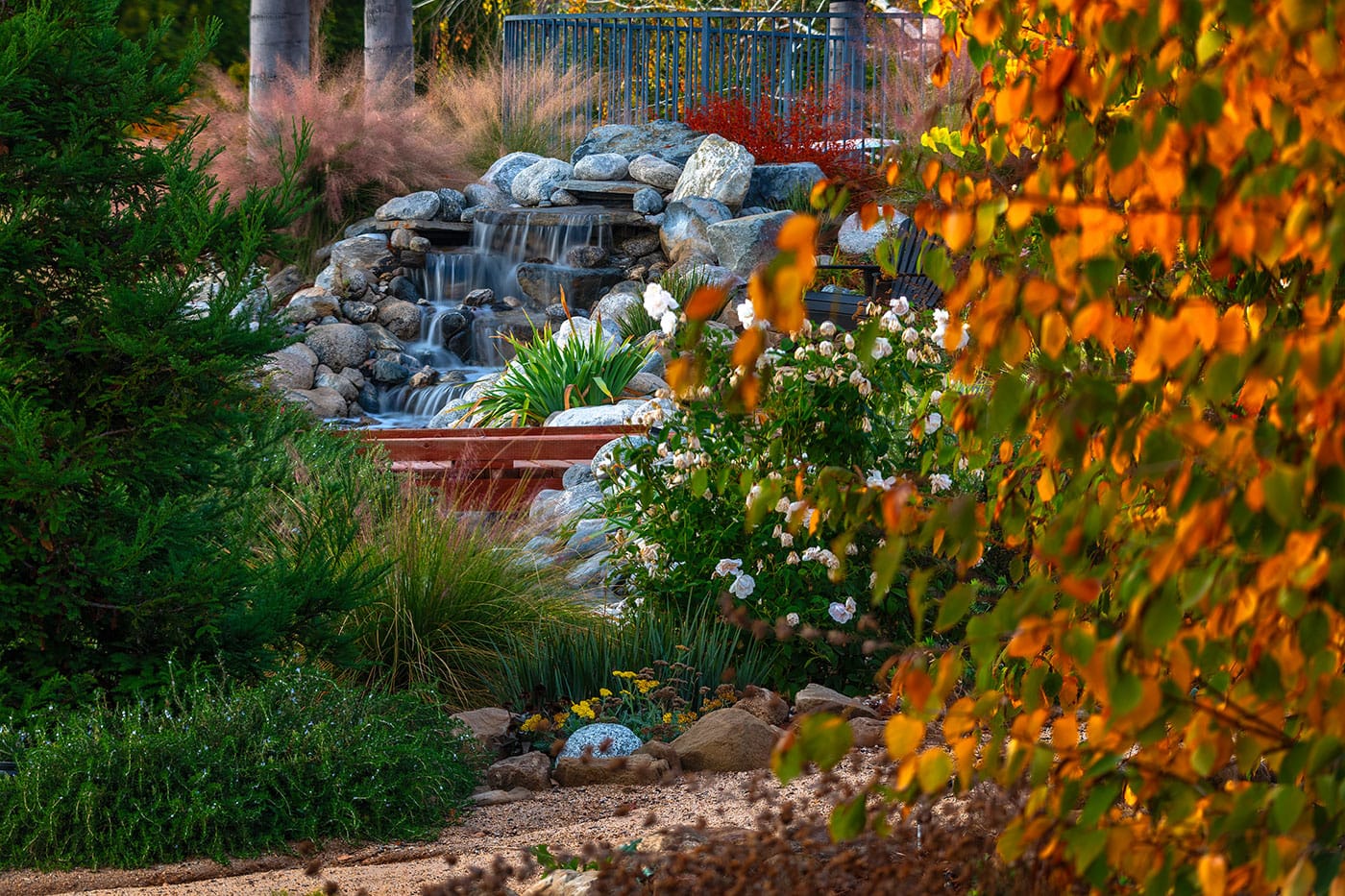
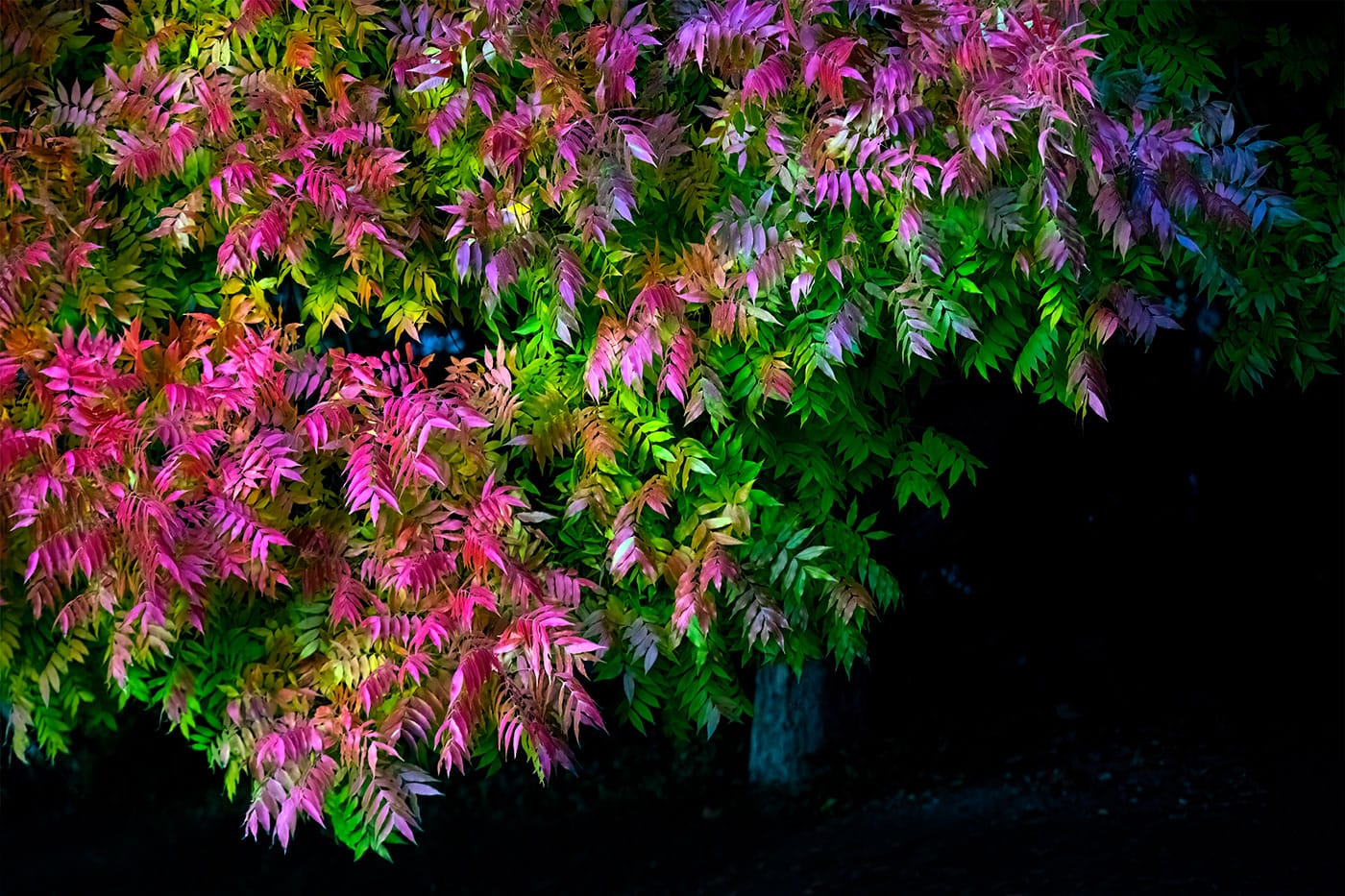
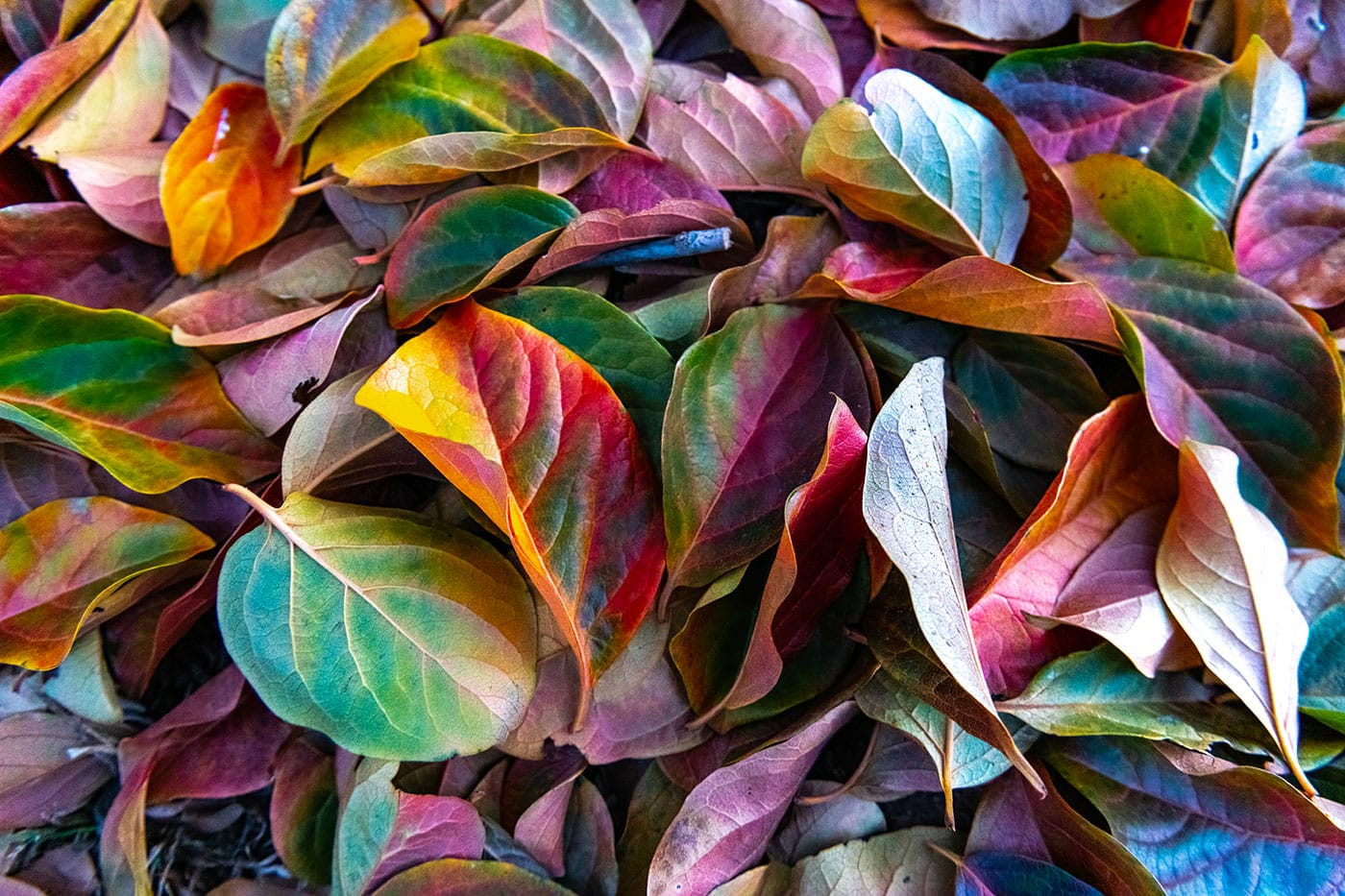
A variety of native Fall plants and trees in Yucaipa
Oak Glen
Oak Glen is probably one of the best-known destinations for fall color in our area.
Despite the damage from the Apple and El Dorado fires, there's still plenty of beauty to be found throughout the region. Even a simple drive up Oak Glen Road from Yucaipa can reveal a wonderful variety of colors and trees.
But I'd encourage you to slow down and spend some time exploring.
Places like Los Rios Rancho and Riley's Farm offer opportunities to experience the season beyond the roadside. Near Los Rios, the trails through the Oak Glen Preserve take you through changing foliage, ponds, streams, and a botanical garden.
It's a beautiful area to explore, whether you're carrying a camera or simply enjoying the season.
Nearby Oak Knoll Park is another favorite. It's essentially a canopy of oak trees, with colorful foliage creating a wonderful atmosphere in the fall.
It also happens to be where my wife and I got married back in 2010, so there's a little personal history there for me.
Even without that connection, it's a fantastic spot for fall color and relatively easy to access.
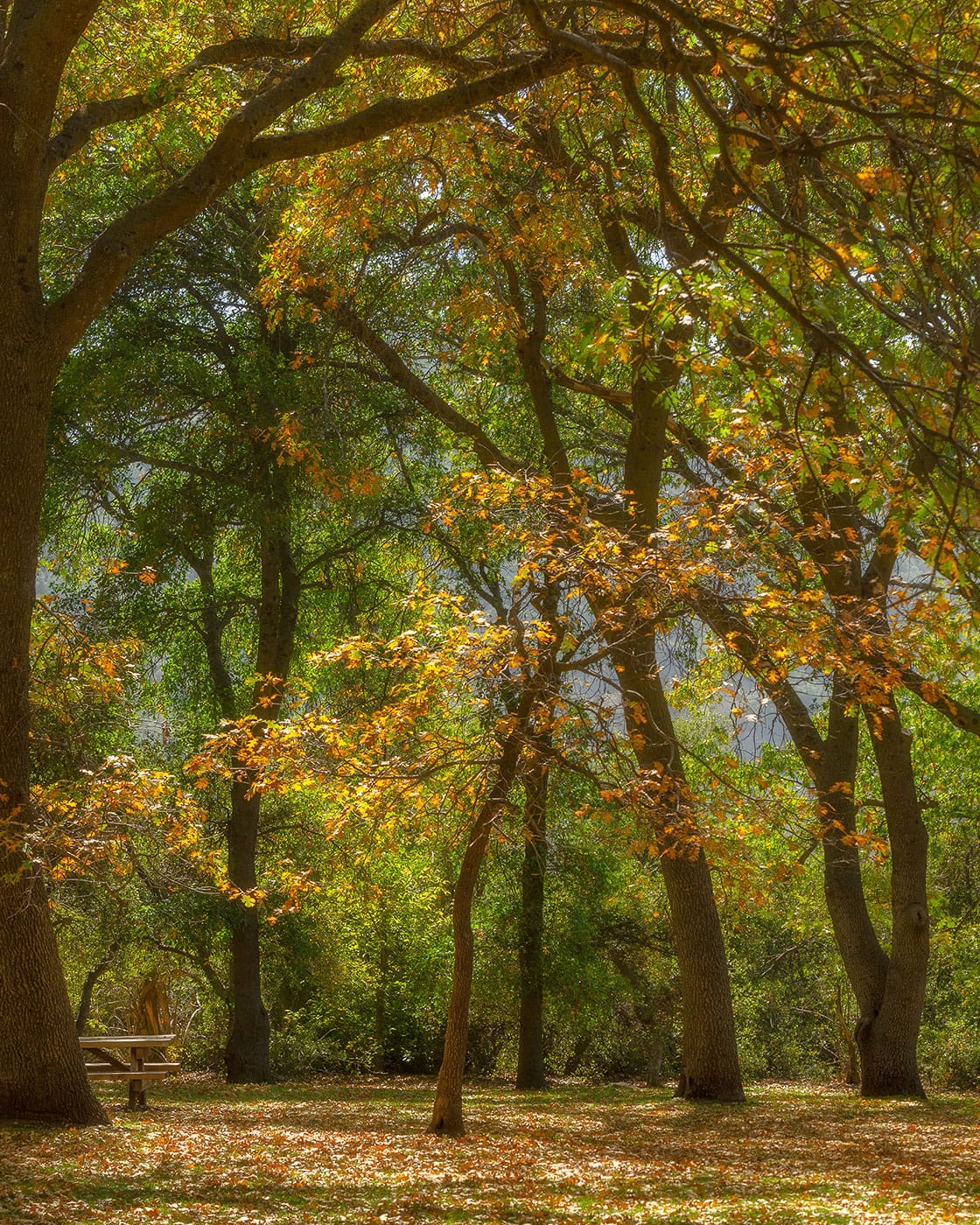
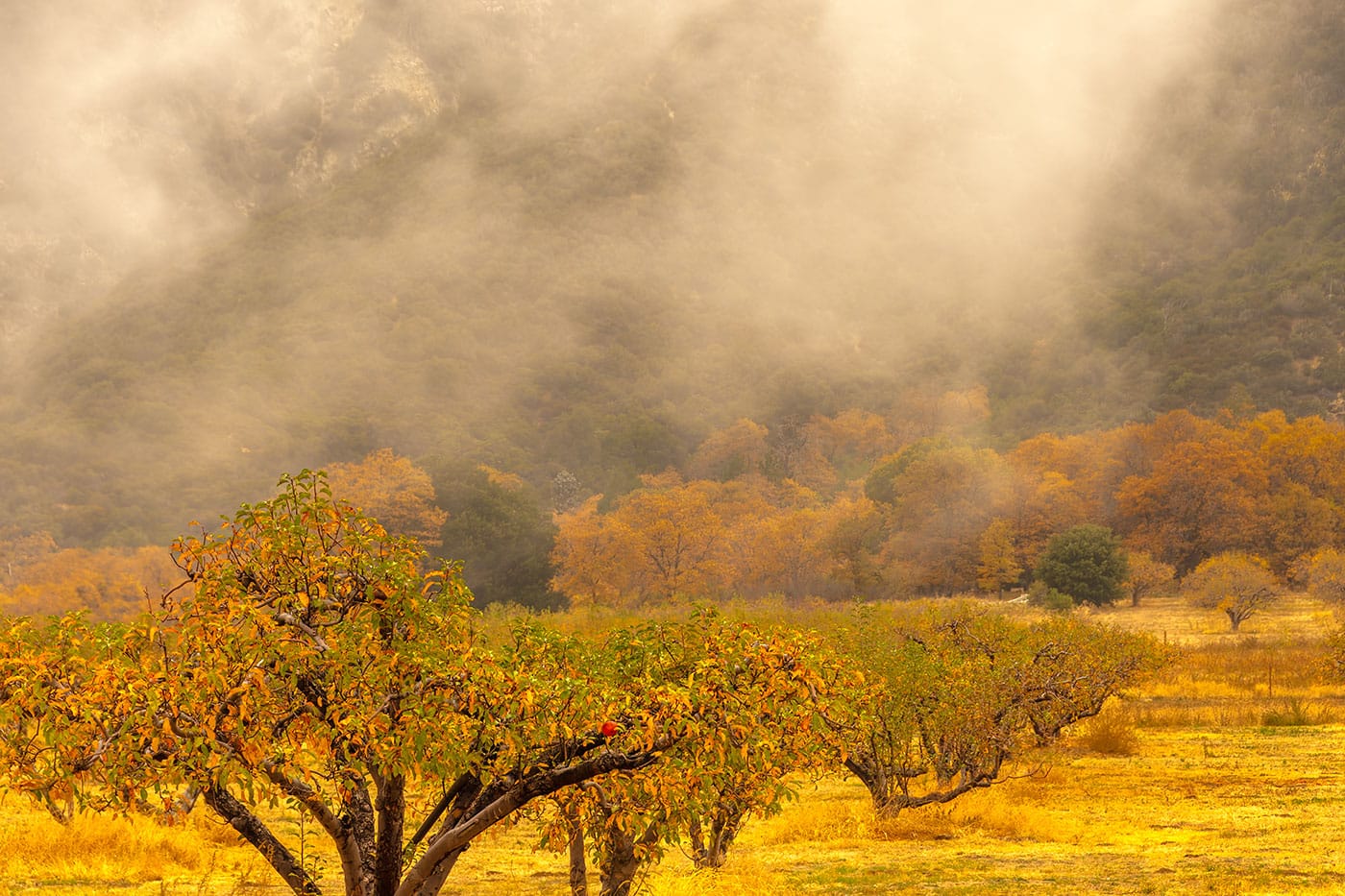
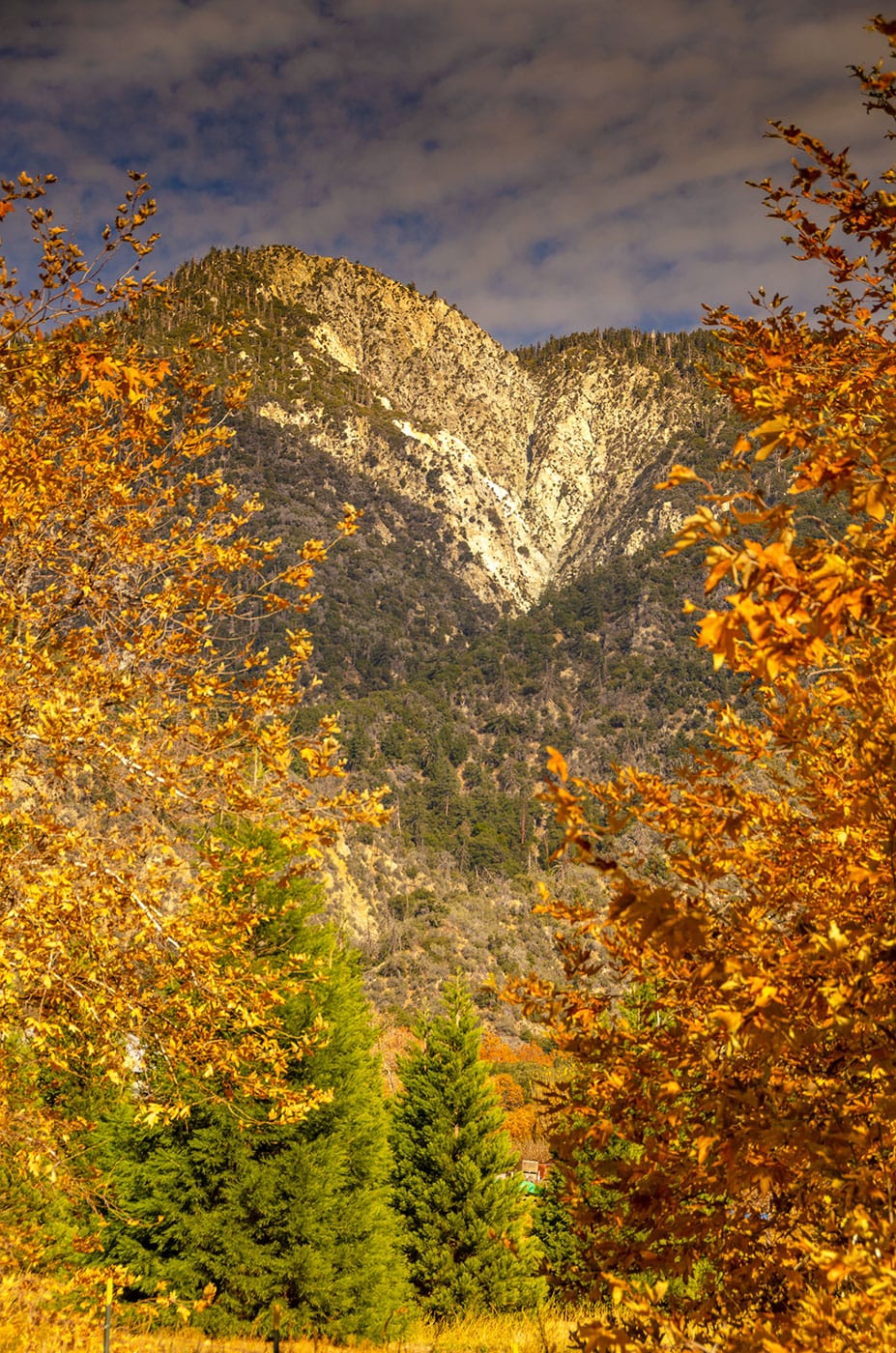
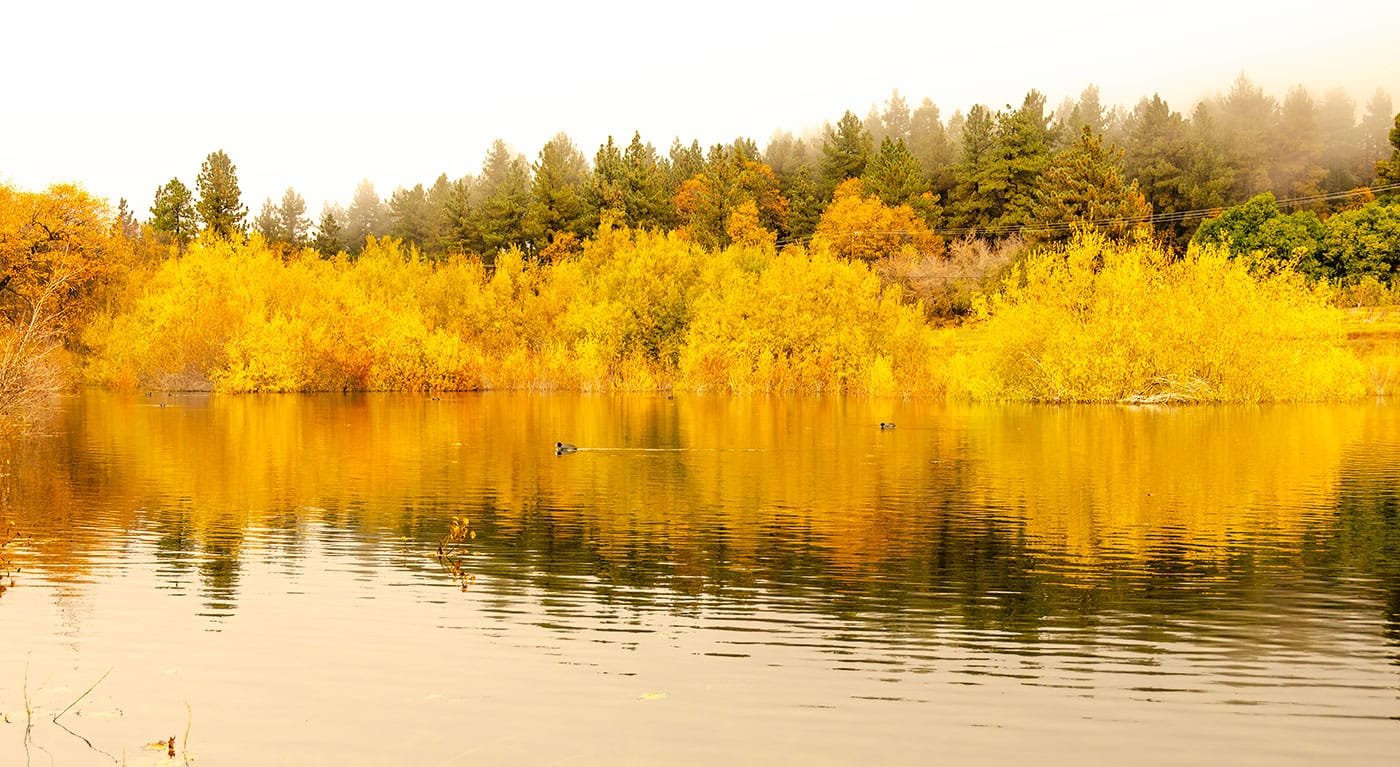
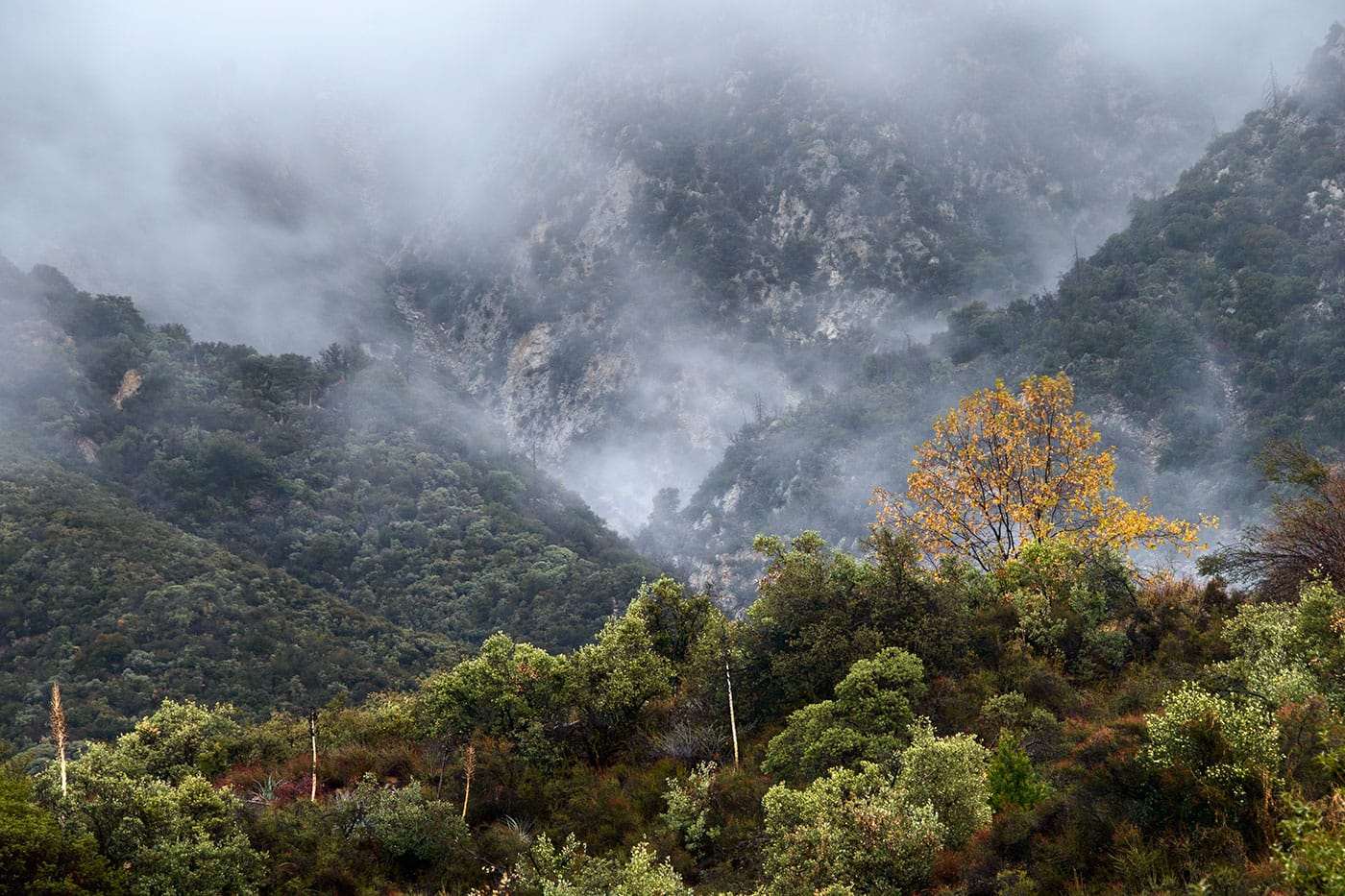
Fall color from Oak Glen. Most shots are near Los Rios Rancho
Photographing Fall Color: Lighting and Composition
Finding the color is only half the process. The other half is deciding how you want to interpret it.
There really isn't one correct way to photograph autumn. So much depends on the atmosphere, lighting, and ultimately, the feeling you're trying to communicate.
For me, I tend to gravitate toward a more mysterious, ambient, and reflective approach.
Here are a couple of ways I try to achieve that.
Underexposing for Mood
One of my favorite techniques when photographing fall foliage is to intentionally underexpose the image, allowing the colors and details to emerge from darkness.
Rather than showing every branch, leaf, and surrounding element, I want the photograph to feel as though the subject is organically appearing out of nothing, gradually fading into black.
There's something about this approach that feels especially appropriate for autumn.
I tend to associate spring with renewal, energy, and life emerging. In my photography, that often translates into brighter exposures, softer highlights, and a more luminous atmosphere.
Fall feels different.
It's a quieter, more reflective season. And I love using darkness to reinforce that feeling.
Achieving this effect starts with the lighting. I generally look for conditions without harsh, direct sunlight. Overcast skies, the moments before sunrise, or the fading light after sunset can all work beautifully.
These conditions allow me to control the contrast more intentionally, isolating the foliage and letting the surrounding environment fall into shadow.
Here are a few examples of that approach.
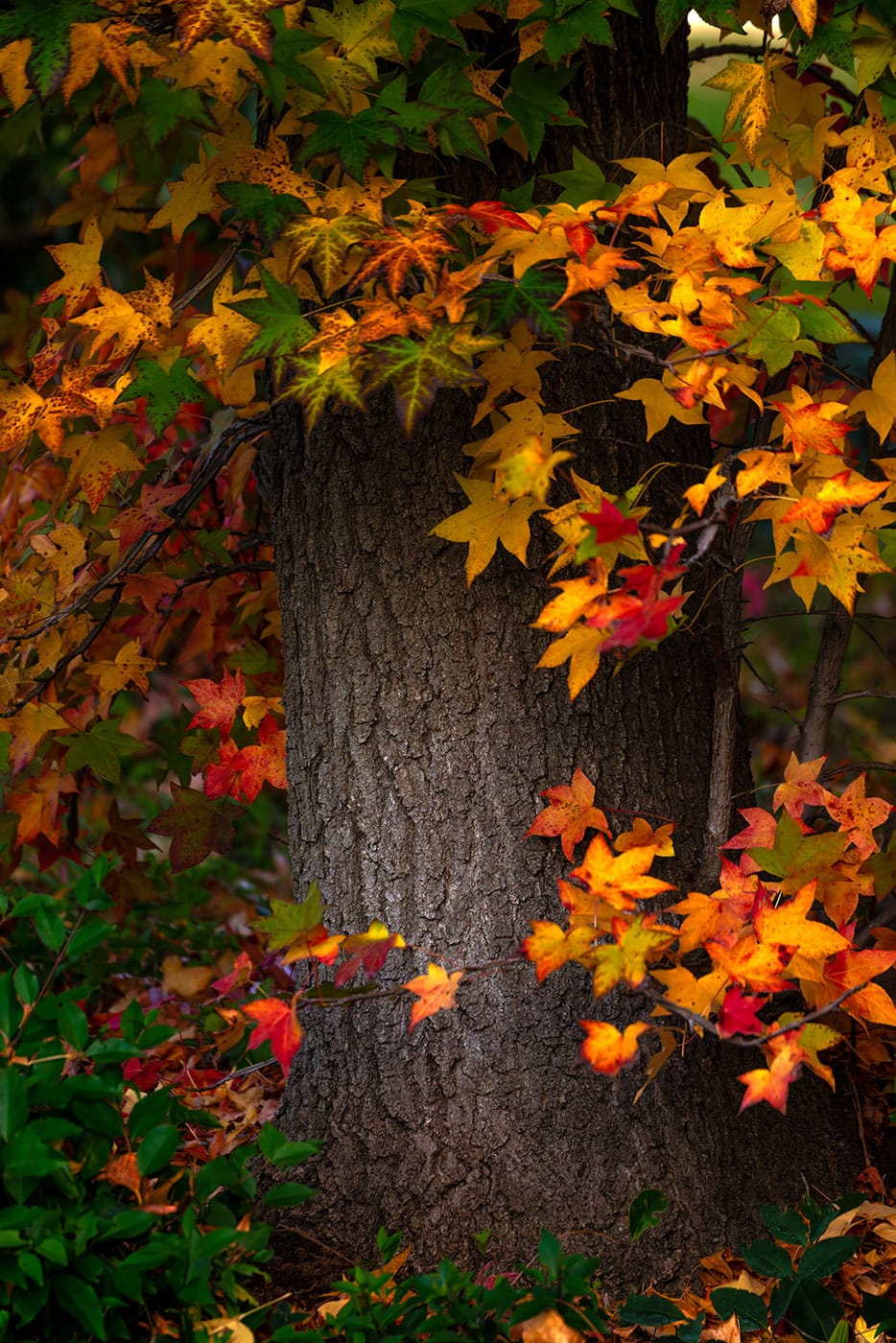
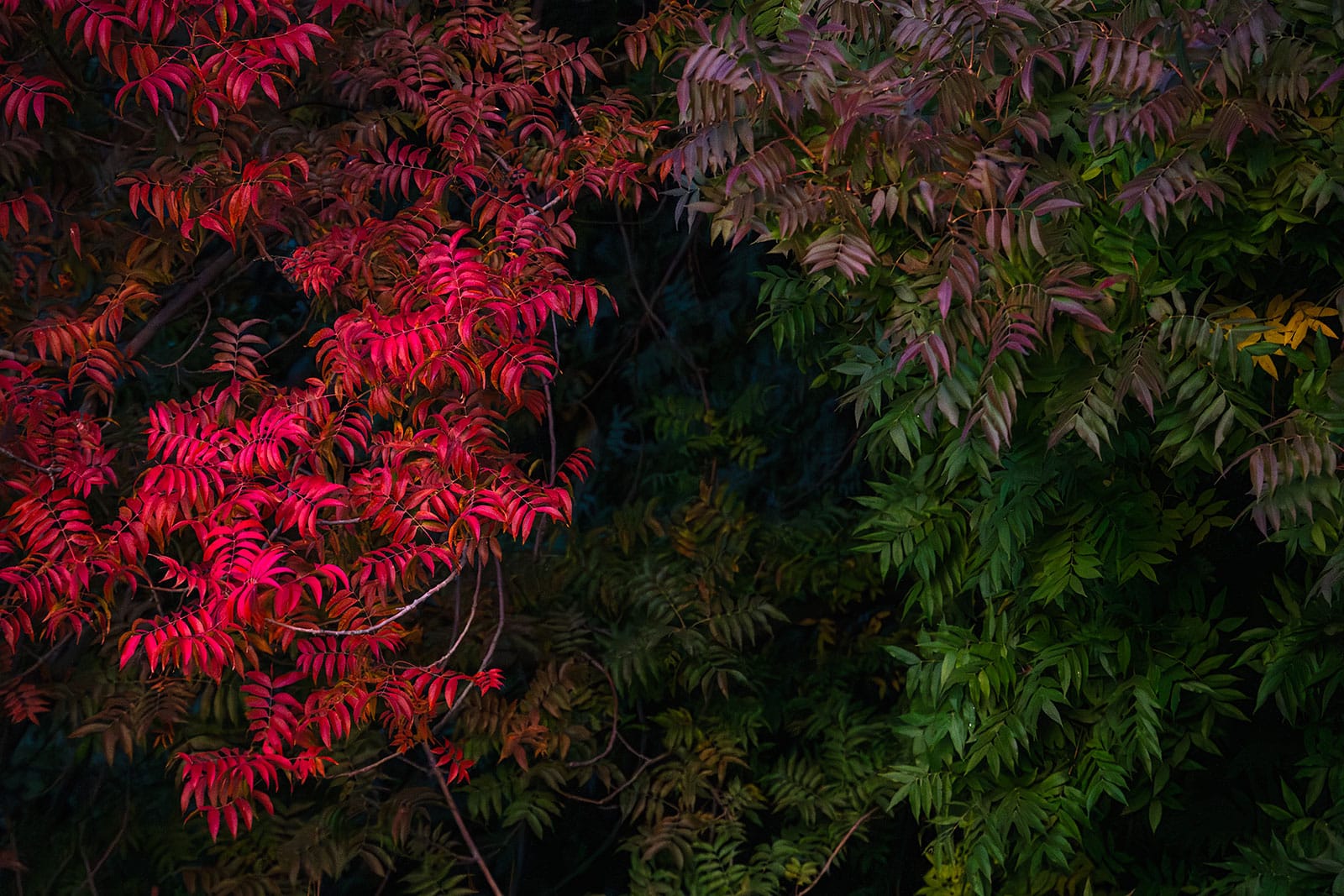
A Sweetgum (Liquidambar) and Pistache Tree in Yucaipa during Fall underexposed
Wider Landscapes: Letting the Scene Tell the Story
When photographing wider landscapes, the challenge shifts from isolating a single subject to bringing multiple elements together into a cohesive composition.
For fall photography, I usually want the foliage to remain the primary subject, with the surrounding landscape providing context.
That doesn't mean you shouldn't photograph a dramatic sunset above a colorful grove of trees. Quite the opposite. But it's important to understand how those elements work together rather than compete for attention.
One of the questions I continually ask myself when composing an image is:
Where do I want the viewer's eye to go?
And just as importantly, how do I guide it there?
A simple approach I often use is to build the composition around three elements: foreground, middle ground, and background.
In many traditional landscape compositions, the middle ground is where the main subject lives. Think of a mountain lake, for example. You might use rocks or grasses in the foreground, the lake and its reflections in the middle ground, and the surrounding peaks or sky in the background.
Each element has a purpose, but the middle ground is often the reason the photograph exists in the first place.
The same concept can work beautifully with fall foliage. A colorful grove might anchor the middle ground, while the surrounding terrain and mountains provide depth and context.
Of course, this isn't a rule that needs to be followed every time. Some of my favorite compositions intentionally break these conventions.
The real objective is simply to make thoughtful decisions about what belongs in the frame, and how those elements contribute to the story you're trying to tell.
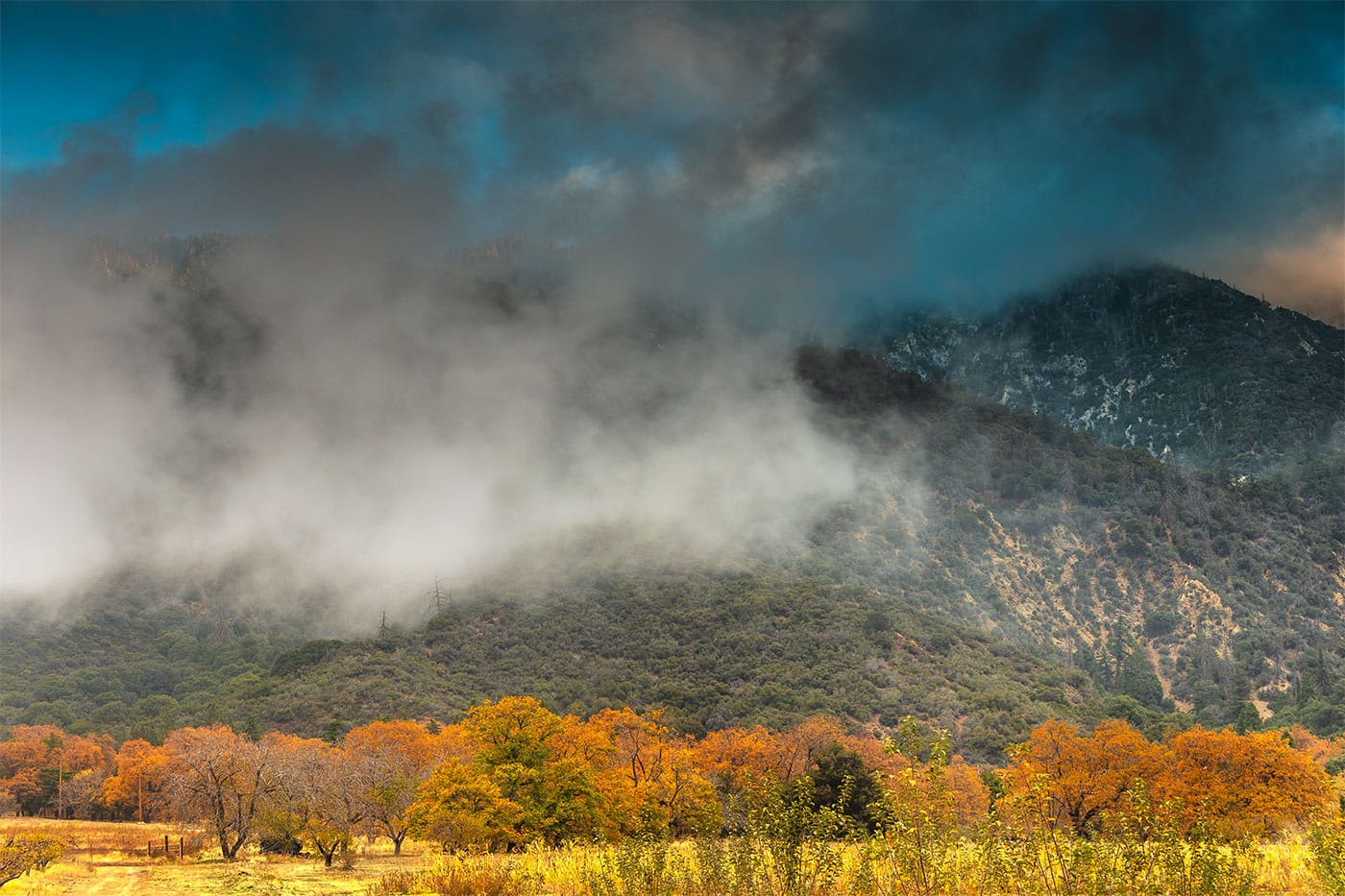
Finding Beauty Close to Home
I think one of the things I appreciate most about photographing fall around Yucaipa is that it forces me to slow down.
In the Sierra, it's easy to be overwhelmed by the scale of the landscape, and the endless miles of hiking. Around home, the beauty is often much more sparse. It might be a single tree, a patch of leaves catching the last light of the day, or a familiar trail that suddenly feels completely different.
But that's part of the appeal.
You don't always need to travel somewhere extraordinary to make a meaningful photograph. Sometimes you just need to look a little more intentionally at what's already around you.
Explore My Photography
For more than two decades, I've explored the mountains and landscapes of California with a camera in hand. From the Sierra Nevada to the San Bernardino Mountains, my work is an ongoing attempt to capture the beauty, wonder, and stories found in these places.
Member discussion